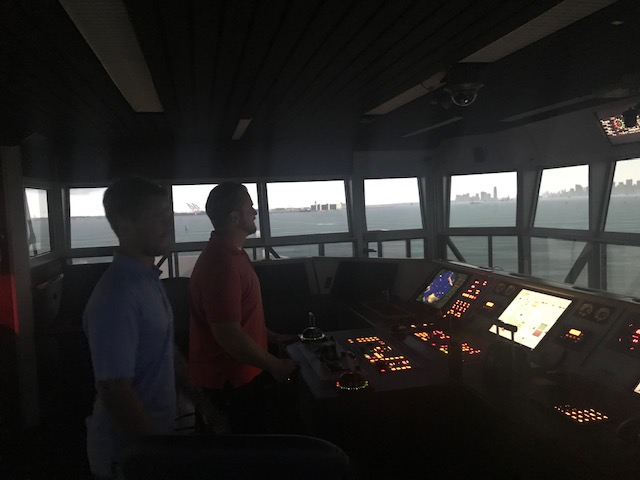
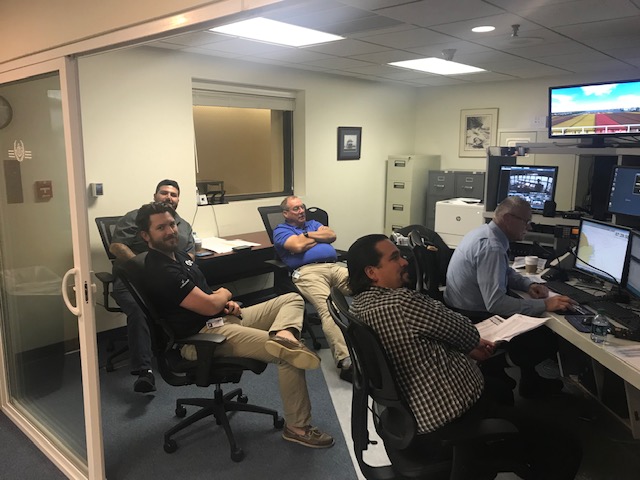
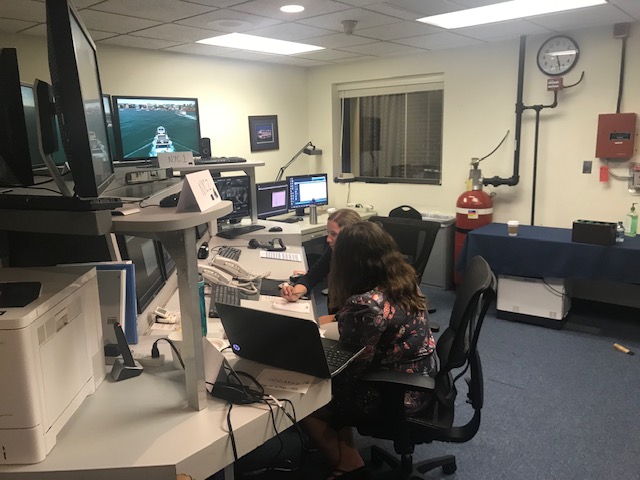
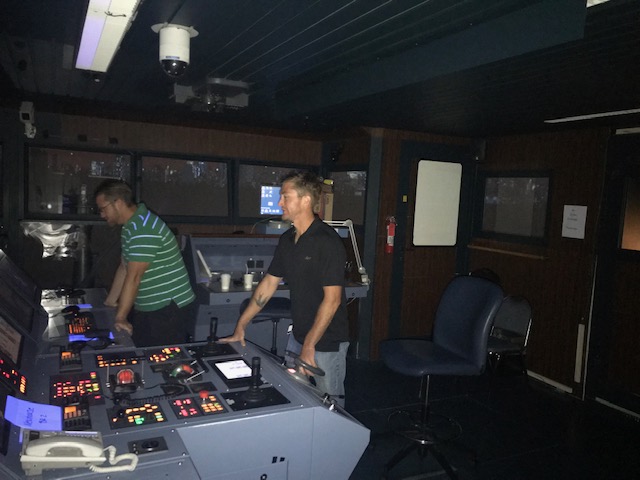
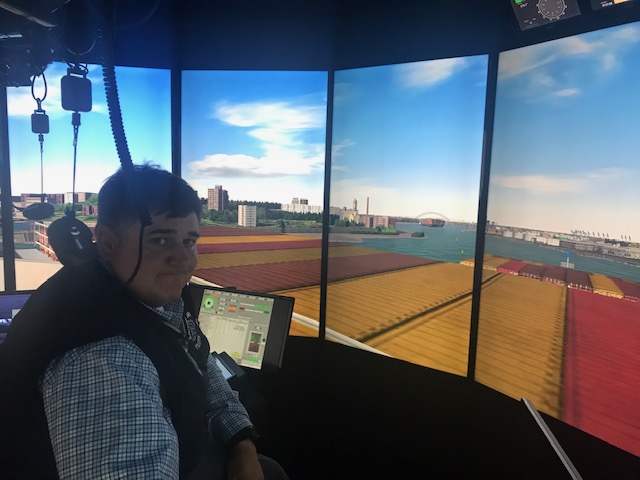
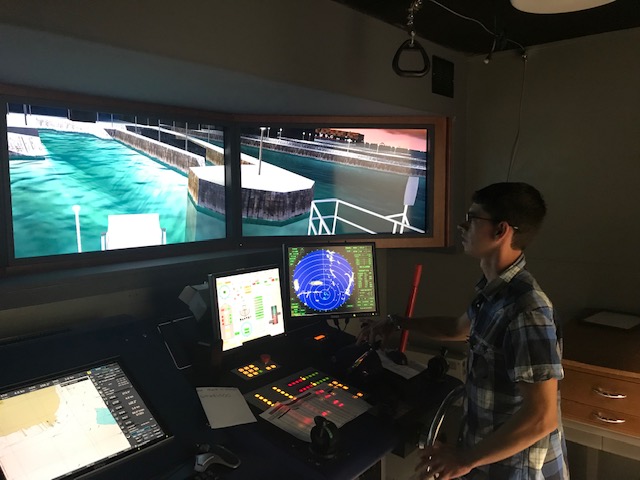
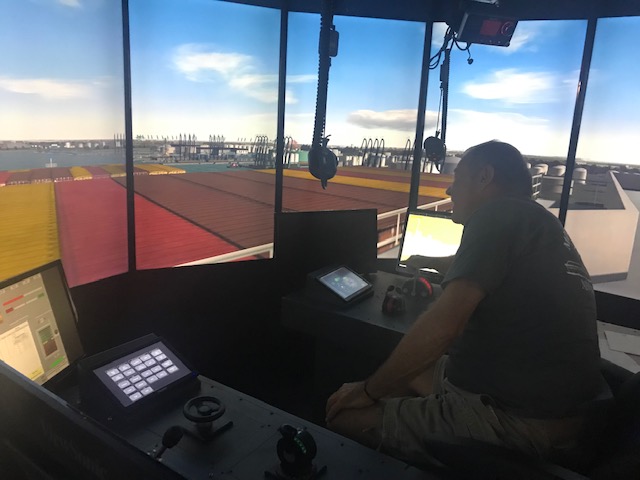
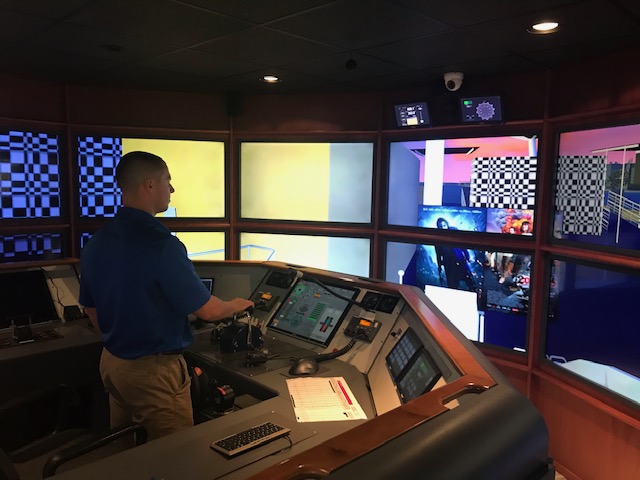
Last month, MITAGS worked with the Staten Island Ferries and the NYC Ferry to conduct simulation research to assess safety concerns from the maritime community regarding additional ferry service by NYC Ferry at the St. George terminal. The assessment included the following:
- Separate simulations incorporating two different landing spots. One directly under the Staten Island Ferry administration building at Slip 7, and the other approximately 300’ north of the SIF Fuel Facility;
- Utilized the current Staten Island Ferry rush hour schedule in the morning and in the afternoon;
- Utilized the proposed NYC Ferry rush hour schedule;
- Provided simulation of approaches and departures from Robbins Reef Light – slightly above the KV Buoy;
- Incorporated the radio chatter with the Ferry Terminal Supervisor and the Vessel Traffic System;
- Incorporated the normal harbor traffic on Conhook Range based on estimates from VTS;
- Incorporated speeds as obtained from AIS.
Using six of our simulators in tandem, MITAGS was able to replicate the proposed schedules of both ferry lines and the above requirements, providing all parties with the research needed to assist with making an informed decision and action plan. Representatives from the Staten Island Ferry, NYC Ferry, the Sandy Hook Pilot Association, Metro Pilots and the U.S. Coast Guard were present.
Related Posts

Glen Paine, Executive Director, MM&P MATES Program, Retires After More Than 23 Years at the Helm
On behalf of the MM&P MATES Program, The Maritime Institute of Technology and Graduate Studies (MITAGS) and Maritime Conference Center (MCC) announce the retirement of long-time Executive Director, Glen Paine after more than 23 years at the helm. Glen’s successor, as selected by the MATES Program trustees, is Director of MITAGS, Eric Friend. Read more.
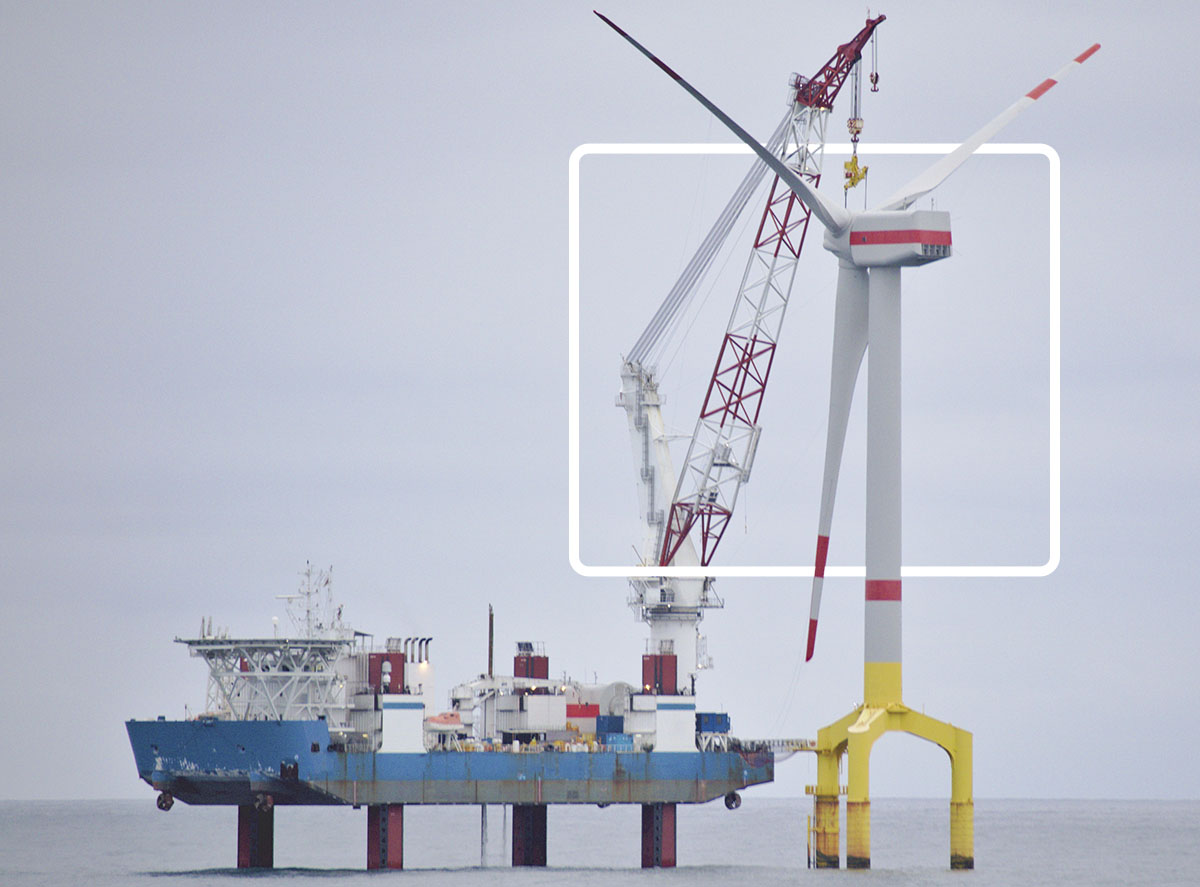
What Is The GWO?
The Global Wind Organization, or GWO, is a non-profit organization that was founded by the world’s leading wind turbine owners and manufacturers. Its goal is to set industry standards which ensure a safer industry and minimize injuries in the work environment. The first version of safety standards was released in 2012 as the GWO Basic Safety Training […]
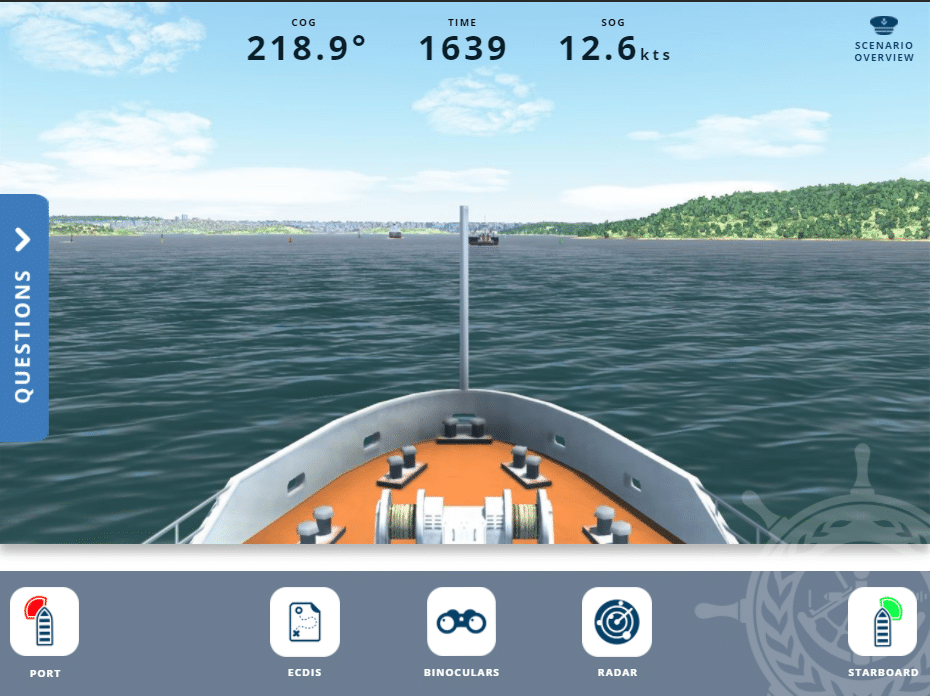
MITAGS launches NAV-SAFE Digital Voyages
MITAGS is starting the new year with the introduction of an exciting new type of training and assessment tool. NAV-SAFE Digital Voyages combine the interaction of a video game with the science of skills assessment. NAV-SAFE is a digital learning product which can be loaded onto a company's Learning Management System (LMS), or accessed via the internet. This means mariners can access the product while working at sea or from home on their time off, without having to travel to a distant training center. NAV-SAFE uses technology drawn from MITAGS's powerful Wärtsilä bridge simulators combined with a polished learning experience developed in association with UK-based KILO Solutions. Participants in a Digital Voyage navigate a ship through a challenging series of interactions with other ships, navigational hazards and weather activity. They make decisions based not only on visual information, but interpretation of data from Radar and ECDIS, and voice communications over VHF radio with other ships, traffic control and their own lookouts.